Cover photo: Pavla Hartmanová
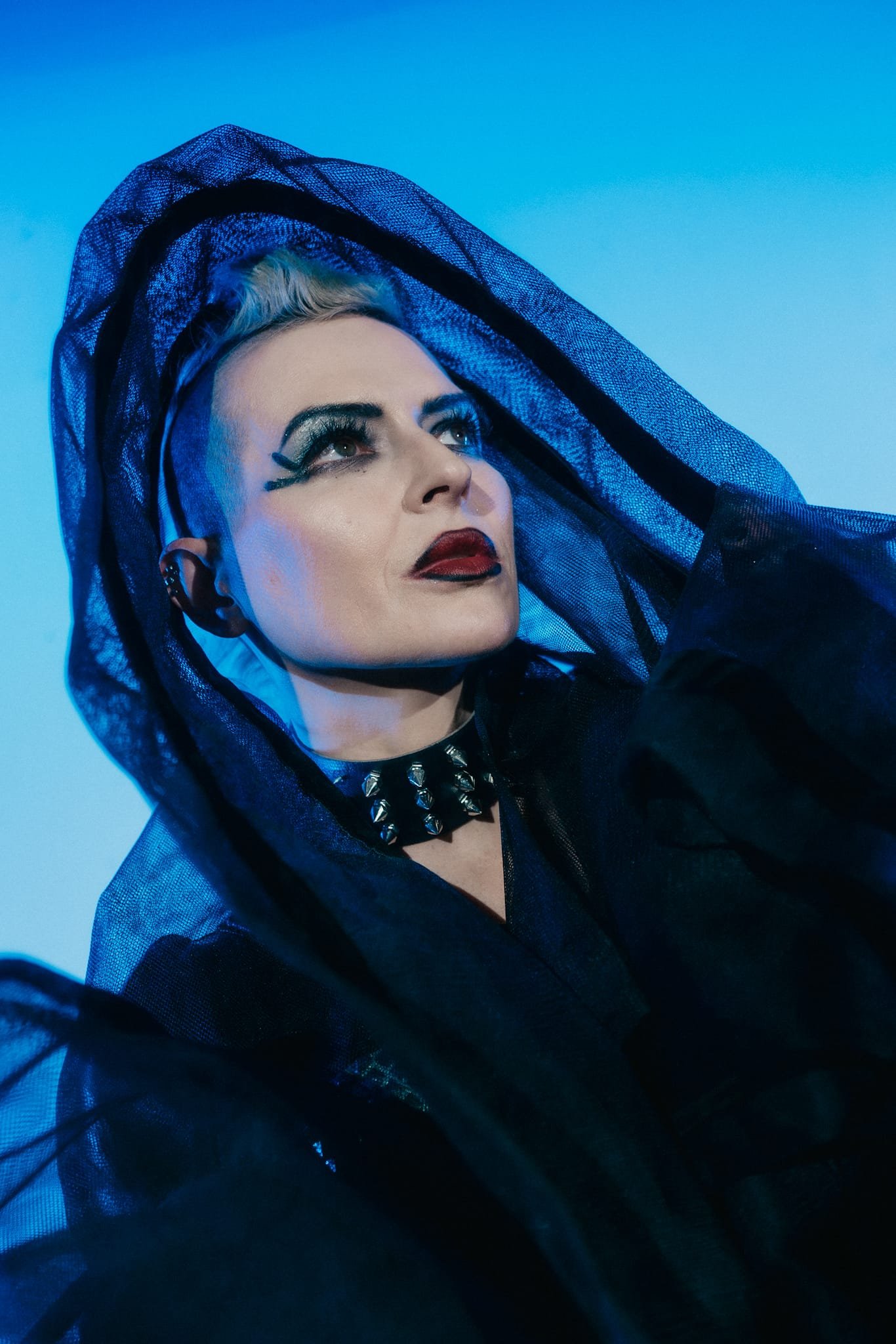
In Polish, her native language, I Ya Toyah means “It’s only me”—a perfect definition for this “one-army woman” who composes, produces, and performs everything by herself. Since 2018, she has released two outstanding albums, multiple singles, toured with some of the biggest names in the industrial scene, and even created merch as diverse as lipstick and hot sauces. But Ania Tarnowska hasn’t made an impact only musically. On the social front, she has helped raise awareness of suicide prevention and collaborated on a Beatles cover to raise funds for Ukraine. We’ll finally get to see her in Spain next Saturday, May 30th, as part of the impressive lineup of the Levante festival Dark City.
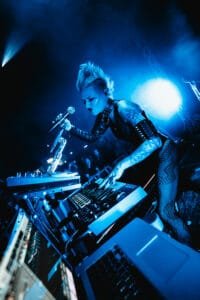
Photo: Pavla Hartmanová
—You’re originally from Łódź, a fairly industrial city, and later moved to Chicago—home to the famous Wax Trax! label. It feels like you were destined to create industrial-influenced music. When did you first start listening to this genre?
—I honestly think both cities shaped me more than I realized at the time. Łódź has this raw, post-industrial atmosphere—beautiful but heavy. You grow up surrounded by old factories, concrete, history, struggle. Then moving to Chicago and discovering the Wax Trax! legacy felt almost symbolic, like I had landed in another version of the same visceral landscape.
I started listening to industrial music very young. Nine Inch Nails, Front Line Assembly, Skinny Puppy, Ministry, Depeche Mode, Stabbing Westward – those artists opened something in me. What attracted me wasn’t just the aggression or sound design. It was honesty. Industrial music allowed ugliness, vulnerability, rage, fear, desire – all the uncomfortable human things most genres try to polish away.
—You’ve played in hardcore, punk rock, jazz, and metal bands. How did those experiences shape I Ya Toyah? I can definitely hear a bit of jazz and rock in your vocal approach.
—Every genre leaves fingerprints on this project. Hardcore and punk rock taught me emotional urgency and sincerity. Metal taught me dynamics and power. Jazz gave me freedom vocally—it made me less afraid of tension, space, improvisation, and unusual phrasing.
I never wanted my vocals to sound too “perfect.” I’m more interested in emotion than technical cleanliness. Sometimes I want the voice to feel fragile, sometimes confrontational, sometimes almost theatrical. All those earlier projects gave me permission to experiment instead of staying inside one lane. Same with music production – every sound of my past comes together to create the genre-bending experience.
—You’re a one-woman performance. Does creating and performing mostly on your own affect the kind of music you make? And when you compose, do you ever think, “How am I going to play this live?”
—Definitely. Being a one-woman project forces me to think creatively. In the studio I can build massive sonic worlds, but live I have to translate that energy into something physical and real for the audience. I actually enjoy that challenge. Sometimes limitations create stronger art. I do think about the live show while composing, but not in a restrictive way. I never want practicality to kill imagination. Usually I ask myself: “What is the emotional core of this song live?” If I can deliver that feeling, the audience will resonate with it.
—Funeral for Love was your first single. Looking back, how do you see it now?
—It is very personal to me because it was the beginning of everything. I hear innocence in it now. I was still discovering my artistic identity and learning how to combine all my influences into one language. Learning production.
At the same time, I still connect with its meaning, its atmosphere. There’s loneliness and longing in that song that still feels true. It reminds me of a moment when I stopped overthinking and finally allowed myself to create the project I truly wanted. The project that seemed impossible, yet it came to life.
—Coming from a rock and metal background, was it difficult to start making electronic music? Also, you studied music production before starting the project, right?
—Yes, I studied music production, and honestly that gave me confidence to fully commit to the project. Transitioning into electronic music was challenging at first because I had to completely rethink the way I approached music – rhythm, texture, layering, and sound design.
With rock music, energy often comes naturally from instruments in a room. Electronic production requires building an atmosphere from scratch. But I became obsessed with that process. I loved discovering how a distorted synth or manipulated sample could create the same emotional impact as a heavy guitar riff.
—Talking about those manipulated samples, you have used a bit range of sounds, from crunching autumn leaves to spreading butter on dry toast. How do you find and
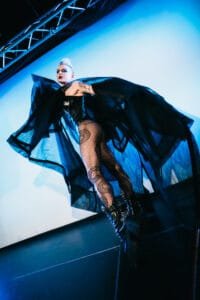
Photo: Pavla Hartmanová
choose sounds for your samples?
—I’m constantly recording random sounds. My phone is full of strange little audio moments captured in nature, city life, or even my own sounds – squeaks, gargles, high pitched weirdness. I love the idea that ordinary objects can become instruments.
Sometimes a sound has a texture that feels more effective than a traditional instrument. Crunching leaves can sound fragile or nostalgic. A kitchen sound can suddenly feel disturbing if processed correctly. I think industrial music taught me that music exists everywhere if you listen closely enough.
—How has the electronic side of I Ya Toyah evolved across the releases? You previously mentioned an interest in synthwave and witch house. Has your focus shifted in a different direction lately?
—I think the project has become darker, heavier, and more emotionally confrontational over time. Earlier releases explored more synthwave and atmospheric influences, but lately I’m drawn toward something more aggressive and intense, yet vulnerable – a collision between industrial, EDM, metal, cinematic sound design, and experimental textures.
I’m less interested in fitting inside a genre now. I care more about creating emotional impact and tension. I want songs to feel beautiful and dangerous at the same time.
—In your songs you address mental wellness and suicide. You’ve also donated part of the proceeds from your music to the American Foundation for Suicide Prevention. Do you feel people are aware enough of this issue? When I looked at Wikipedia, I was surprised to see that several African countries rank very high in suicide rates. What’s your perspective on that?
—I don’t think society is aware enough yet, even though conversations around mental health have improved. There’s still a lot of shame, isolation, and misunderstanding surrounding these struggles. We are all still alone and invisible in the crowd. And of course, mental illness doesn’t look the same everywhere. Different countries and cultures experience different pressures—economic instability, trauma, violence, lack of healthcare, social stigma. But emotional suffering is universal.
For me, speaking openly about these topics through music is important because art can reach people in ways statistics sometimes cannot. If somebody hears a song and feels less alone for even a moment, that matters deeply to me. It’s everything.
—For Code Blue, you described it as a testament to mental wellness and illness, and the culmination of a painful but therapeutic personal journey. How did writing about it help you?
—Writing that material was incredibly therapeutic but also emotionally exhausting. Some songs felt like reopening wounds I had tried to ignore. But turning painful experiences into art gave those feelings purpose. Instead of letting darkness consume me internally, I transformed it into something external—something that could connect with others. I think that process helped me understand myself better and also helped me stop being afraid of difficult emotions.
—How did you choose the producers for the Code Blue Reloaded remix album?
—I wanted artists who each brought a distinct emotional perspective to the songs. I wasn’t interested in remixes that simply changed the beat—I wanted reinterpretations.
A remix can reveal hidden DNA inside a track. Some producers made songs more dance-oriented, others made them darker, colder, heavier, or more cinematic. I chose people whose artistic identities I genuinely respected and trusted.
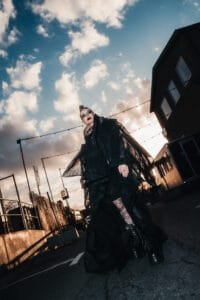
Photo: Pavla Hartmanová
—For the EP Out of Order, you released a video for each track. Was there anything else you wanted to express beyond the music itself?
—Absolutely. Visual storytelling is almost as important to me as music itself. Sometimes an image can communicate emotions words cannot.
Out of Order explored fragmentation, identity, emotional instability, and internal chaos. The visuals allowed me to build an entire universe around those feelings. I wanted people to experience the songs, not just hear them.
—Songs like “Vast Spaces” feature guitars in a much more prominent way. The same happened on your next EP, I Am the Fire, and also in Drama. What led you in that direction?
—I think guitars naturally came back because they’re part of my emotional language. Even when I’m deep inside electronic production, there’s still a part of me rooted in rock and metal energy.
I guess at some point I stopped seeing electronic and guitar-based music as separate worlds. Combining them felt honest to who I am. A heavy guitar can create physical tension that perfectly complements industrial electronics.
—You’ve been using a Strandberg guitar. What do you find most interesting about its sound?
—I love how responsive and modern it feels. Strandberg guitars have incredible clarity, especially for more experimental textures. They allow me to move between aggressive sounds and more atmospheric layers very naturally. Also, ergonomically they are amazing for touring and live performance. Once you get used to them, it’s hard to go back.
—In Drama, you worked again with Walter Flakus from Stabbing Westward. What do you like about him as a producer?
—What I appreciate most about Walter is that he respects artistic identity. He didn’t try to turn me into a copy of himself, or influence the final vision – rather, he supported that and focused on helping to find the means to get there. Working with him felt collaborative and honest. He also has a deep understanding of the musical space and atmosphere, which is very important to me.
—Your second album is quite varied in style. Did it take you a long time to write those songs?
—Yes, it did, because I never wanted the album to feel repetitive or emotionally flat. Some songs were written quickly during emotional moments, while others evolved over long periods of experimentation and rewriting.
I actually like when albums feel multidimensional. Human emotions are not one genre. I wanted the record to move through vulnerability, rage, intimacy, chaos, beauty, and destruction naturally. It’s the DRAMA of life. It’s intentional that it’s a genre-bender.
—You’re also an active member of The Joy Thieves, a supergroup with 50+ members and a lot of artists from the industrial scene. How does a project like that work? Have you met people from the industrial scene through it?
—The Joy Thieves is a very unique creative community. It’s chaotic in the best possible way because so many artists bring completely different influences and personalities into the process.
It definitely helped me connect with many people from the industrial scene and build friendships and collaborations. I think one beautiful thing about industrial music is that the community itself can be incredibly supportive and passionate.
— You started your own label, Femme Fatale Records. Do you plan to release other artists’ music as well, or is it mainly focused on your own releases?
—Right now the main focus is supporting and expanding the I Ya Toyah vision creatively and independently. Owning the label allows me to make artistic decisions freely and move without compromise. But I’m definitely open to growing it in the future and potentially supporting other artists whose vision aligns with that spirit of fearless, emotionally honest art.
— “Feelings”, your last single, is quite different from what you did before. Can you tell us more about this latest single and what inspired it?
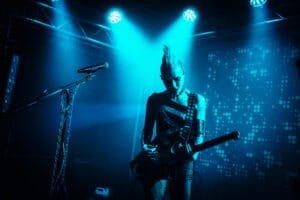
Photo: Pavla Hartmanová
—”Feelings” was born from resisting the pressure to feel less in a world that often rewards numbness. It’s probably one of my most emotionally direct songs so far. Sonically I wanted it to feel explosive—industrial, EDM, metal, cinematic—but vulnerable at the same time. The song talks about protecting your heart in environments that constantly try to harden people. Even the music video reflects that idea through very extreme imagery involving sacrifice, pain, and survival. I wanted the entire experience to feel emotionally overwhelming in a very human way.
—You collaborated with Mach Fox on Smile That Killed a Country, after touring with Zwaremachine. How do you remember that tour, and how was working with him?
—Oh wow, this was forever ago! The very beginnings, right before the pandemic. That tour was intense, chaotic, exhausting, and incredibly fun—all the things a good tour should be. Touring creates a strange temporary universe where people become very close very quickly.
Working with Mach Fox felt natural because there was mutual respect creatively.
—One of your most intriguing pieces of merch is the I Am the Fire hot sauce. How did you come up with that idea and how did you develop it?
—I always envision merch that feels memorable and slightly unexpected. Music should engage senses and emotions, so I loved the idea of creating something people could literally experience physically.
The hot sauce concept matched the energy of “I Am the Fire” song and EP perfectly—intense, addictive, painful, fun. Developing it was actually a really creative process because I wanted the flavor and branding to genuinely reflect the spirit of the release.
—How is your dog doing? Do you miss him during tours?
—Benek is doing great—and yes, I miss him terribly during tours. He’s family, he is my everything!
Touring is exciting but there’s also loneliness in constant moving. Coming home Benek brings me back to reality very quickly. He has this incredible ability to ground me emotionally. When I go on tour. I always bring a plush toy that resembles him- Benek the Fake. Cuddling that toy helps a little. But I still can’t wait to hold the real one.
—What’s next for I Ya Toyah? How will the next era feel?
—The next era is here! And it is more fearless, more confrontational, more emotional, and more visually immersive. I’m interested in pushing every aspect further—music, visuals, live performance, fashion, storytelling. My focus is to make it feel like stepping into a beautiful collapse. Something hypnotic but lethal. Very human but almost unreal at the same time.
—And finally, what can we expect from your concert at Dark City?
—Intensity. Emotion. Connection. Unreleased material.
I don’t like performances that feel distant or overly calculated. I want people to feel pulled into another world for that moment together. There will be heavy energy, vulnerability, atmosphere, aggression, and hopefully the feeling that we all survived something together by the end of the set.
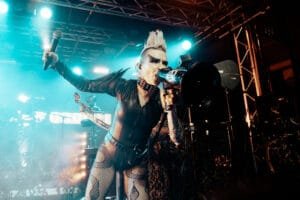
Photo: Pavla Hartmanová