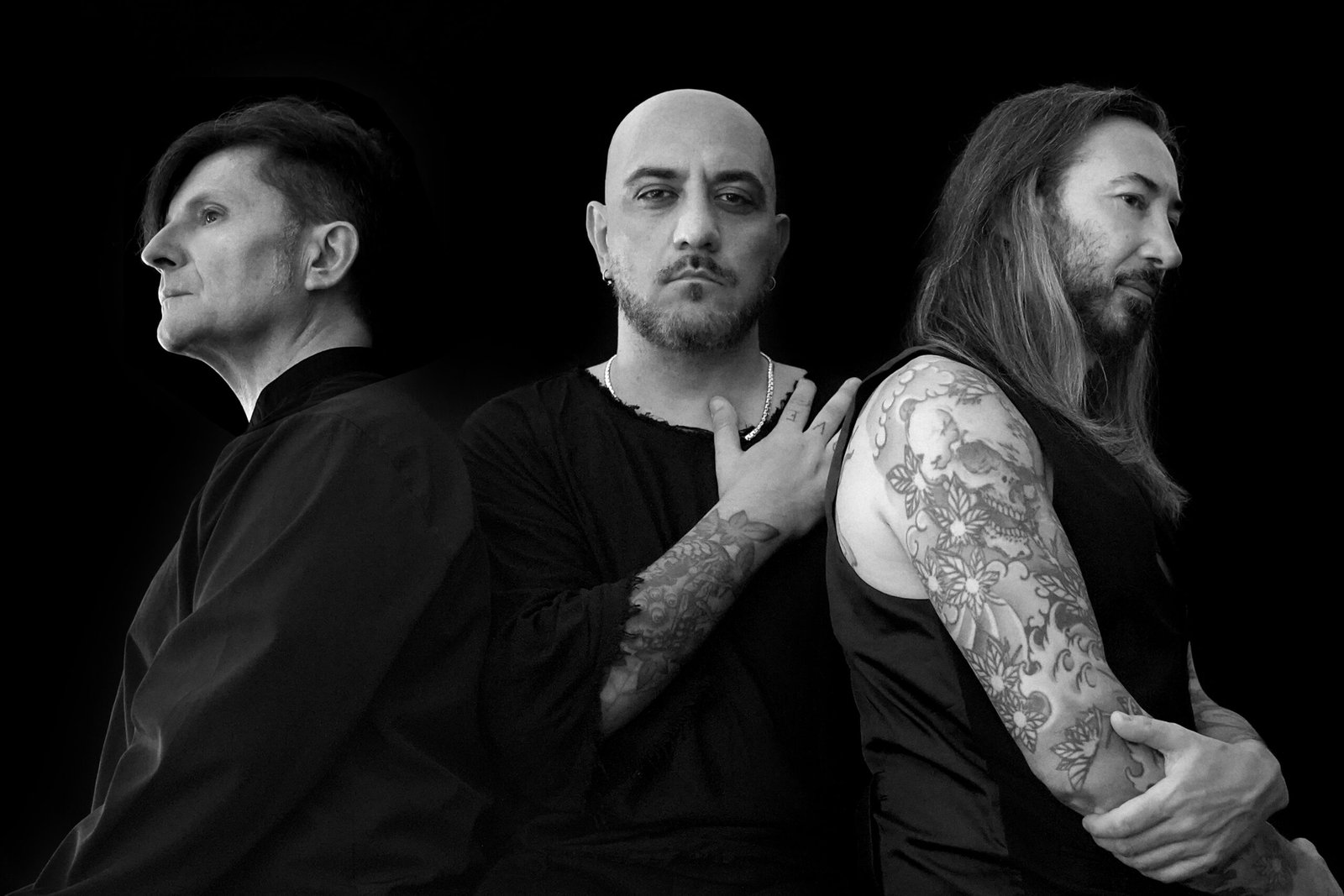
This Eternal Decay started out as a side project bringing together members of several Italian bands, but it soon became established as a group with an identity of its own. Across five intense albums, its three musicians — four until Pasquale Vico’s departure — have shown a remarkable ability to move between genres, from the industrial-tinged sound of their early days to the darkwave they’ve honed on their most recent work. We spoke with Riccardo Sabetti, vocalist of this trio that has brought a breath of fresh air into the midst of this eternal decay. Next year we’ll have two chances to see them live: first in February, at the Niebla Sónica festival, and later in June, at Dark City Fest.
Cover photo: Vanessa Litardi
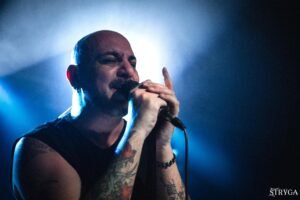
Photo: Stryga
—Riccardo, you first started This Eternal Decay as a solo project, right? What was your aim back then, and when did it become a “superband” with other members from the Italian scene?
—Yes, that’s right. This Eternal Decay started in 2018 as my solo project. At the time, I wanted to create a musical space where I could bring together all the different influences that had shaped me over the years, from post-punk and darkwave to industrial and electronic music, without being tied to the identity or sound of my previous band, Spiral69. The idea was to have complete creative freedom and explore a darker, more personal and experimental dimension of songwriting.
However, the project began evolving into a band almost immediately, when Andrea Freda (Spiritual Front) joined me shortly after its inception. In 2021, Alessio Schiavi (Avant-Garde) became part of the project as well, further shaping its musical identity. I wouldn’t necessarily call it a supergroup, but I think the interesting thing is that each of us comes from a different musical background, bringing our own experiences and sensibilities into the mix. Today, This Eternal Decay is much more than my original solo project: it’s a collective creative identity, while still maintaining the vision and artistic direction that started it all.
—In an interview, one of you said that you tried to “experiment in a completely opposite way to how we work with our other projects.” How did you manage to find a different approach from your other bands?
—I think the key was to free ourselves from any expectations, both our own and those coming from the outside. We didn’t want to repeat what we were already doing with our other projects, nor did we want to follow a predefined direction.
With This Eternal Decay, we gave ourselves the freedom to explore different territories, to mix influences that might seem distant from each other, and to embrace a more instinctive and less structured creative process. Coming from different musical backgrounds, each of us brought a different sensibility to the table. Rather than trying to find a common ground from the beginning, we allowed these differences to coexist and interact. Sometimes the most interesting ideas came precisely from that contrast.
In a way, This Eternal Decay became a space where we could step outside our usual musical identities, take risks and rediscover the pleasure of creating music without too many boundaries.
—As you said, two of you were in Spiral69. What’s the status of the band right now? Spiral69 released a new album a couple of years ago — can you tell us about it?
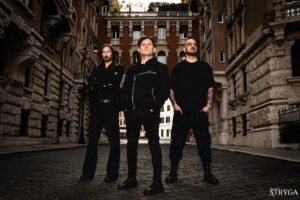
Photo: Stryga
—Spiral69 are officially disbanded at the moment. After many years together, we eventually reached a point where it felt right for each of us to follow different paths and explore new musical directions. The last album, released a couple of years ago, was an important chapter in the band’s history and a way to bring that journey to a meaningful conclusion. I’m still very proud of what we created with Spiral69, and those years have certainly shaped who I am as a musician today.
As for the future, who knows? I never like to say never. Some stories might not be completely over.
—Back to This Eternal Decay, the band has changed style with every release: first industrial, then synth pop, then post-punk, darkwave… How do you keep the essence of the band with each new direction?
—I think the essence of This Eternal Decay has never been tied to a specific genre, but rather to a certain emotional attitude and a way of approaching music. We’ve always been interested in exploring different sounds, textures and atmospheres, without putting boundaries around ourselves. Each album reflects a different moment in our personal and artistic evolution, and we don’t want to repeat ourselves just for the sake of being recognizable.
What remains constant is the emotional core: melancholy, darkness, intensity, and a certain cinematic approach to songwriting. Genres are just languages we use to express these feelings. In a way, changing is our way of staying true to ourselves. The sound can evolve, but the identity behind it remains the same.
—In I Choose an Eternity of This, your first album, the influence of NIN is evident. Riccardo, you chose The Fragile as one of your favorite records. How has this record influenced the sound of the first era of the band?
—I think The Fragile had a huge influence on the way I approached songwriting and sound design during the early days of This Eternal Decay. What always fascinated me about that record was its ability to combine aggression, electronics and industrial textures with incredibly emotional and intimate moments. It showed me that electronic music could be dark and unsettling without losing its human side, and that distorted sounds, noise and unconventional arrangements could coexist with beautiful melodies and deeply melancholic atmospheres.
I wouldn’t say we wanted to sound like Nine Inch Nails, but rather that The Fragile gave me the freedom to experiment and to think of music as something cinematic, dynamic and emotionally complex. That approach definitely shaped the DNA of our first album
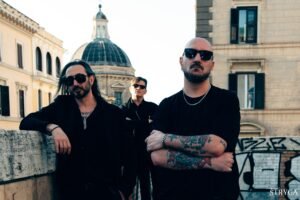
Photo: Stryga
—Instead, the second album, Silence, has more of an ’80s dark/cold-wave influence mixed with the previous industrial elements. What do you find interesting in ’80s music?
—What fascinates me about ’80s music is its ability to combine atmosphere, emotion and experimentation in a very distinctive way. There was something incredibly powerful in the sounds of that era: the coldness of synthesizers, the hypnotic rhythms, the melancholic melodies and that almost cinematic approach to songwriting. I’ve always been drawn to bands that managed to create something dark and introspective while still being melodic and emotionally direct. Artists like New Order, The Chameleons, Joy Division and early Killing Joke have had a significant influence on my musical background.
With Silence, we wanted to explore that aesthetic without simply looking backwards. We tried to take those elements and merge them with our industrial roots, giving them a more contemporary and personal identity. For me, the interesting thing is not recreating the past, but using its language to express something that belongs to the present.
—The main theme of the album was the inner solitude in an increasingly digitally connected world. Do you think this can still be stopped, or will it get worse and worse? Having a 3-year-old child, I’m amazed at how soon babies start using tablets and phones, and how disconnected from others they become.
—I honestly think it’s a very difficult phenomenon to stop, because technology has become such an integral part of our everyday lives that we’ve almost stopped questioning its presence. The paradox is that we’ve never had so many ways to communicate, yet genuine human connection seems increasingly fragile. We’re constantly exposed to other people’s lives, thoughts and images, but that doesn’t necessarily mean we’re getting any closer to one another. Sometimes I think we’re just replacing the experience of living with the experience of watching life happen through a screen.
I don’t think technology itself is the enemy. It’s how we use it, and perhaps more importantly, what we allow it to replace. I’m particularly concerned about children growing up in this environment, because they might never experience a world without that constant digital presence. Can it be stopped? Probably not. But I believe we can still choose how much space we give it in our lives. And perhaps that’s where it starts: learning to be present again, to listen, to look someone in the eyes, to experience boredom, silence and even loneliness without immediately trying to escape them. After all, I think that’s what our albums are really about: the need to feel something real in a world that increasingly seems to exist behind a screen.
—In Silence, there’s a collaboration with Alex from Then Comes Silence. In this album, the next one, and even the latest one, there are a couple of guest musicians. What do you like about collaborating with other people on your own albums?
—I’ve always believed that music becomes more interesting when you allow other people to bring something of themselves into it. Even though I usually have a very clear vision of what I want to achieve with an album, I love the idea of opening that vision to different perspectives, personalities and creative approaches.
Collaborations are not just about adding a different voice or instrument to a song. They’re about introducing an unexpected element, something you might not have come up with on your own. Sometimes another artist can take a song somewhere you hadn’t imagined, and that’s what makes the process exciting.
I also think there’s something beautiful about the human connection behind it. Music is a very personal and sometimes solitary process, so sharing that experience with artists you admire and respect makes it even more meaningful. Alex is a great example of that. I really appreciate what he brings to the music, both artistically and personally.
—Nocturnæ, your third LP, focused on reconstructing the idea of life after the Covid pandemic, right? How did the band live through those days?
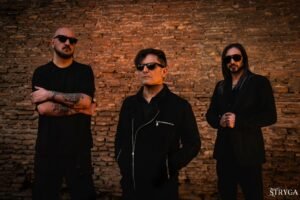
Photo: Stryga
—Yes, absolutely. Nocturnæ was conceived during a time when the world was slowly trying to find its way back to normality, but we didn’t want to simply document the post-pandemic period. We wanted to explore the emotional aftermath of those years: the isolation, the uncertainty, the loss of human connection, and the strange feeling of having to learn how to live together again.
For us, those days were a mix of frustration, introspection and creative urgency. Music became a way to process everything we had experienced, both individually and collectively. In a way, Nocturnae reflects that suspended feeling between darkness and the desire to move forward. It was about finding a new sense of connection and rediscovering what it means to be alive, together, after such an unprecedented experience.
—Absolution, and also Spettro, were more darkwave. Nowadays there are a lot of bands in this genre — was it difficult to be creative or offer a fresh approach?
—I think the key has always been to avoid following trends and, above all, to stay true to our own artistic vision. Darkwave is a genre with a strong identity, and naturally there are many bands exploring similar territories. But I’ve never been particularly interested in reinventing the genre just for the sake of being different.
With Absolution and Spettro, I was exploring a more traditional darkwave sound. With This Eternal Decay, I wanted to push those boundaries, bringing together different influences, from post-punk and industrial to synthpop and electronic music. For me, originality doesn’t necessarily come from inventing something completely new, but from combining familiar elements in a way that reflects your own personality and experiences. Ultimately, the most important thing is to sound like yourself.
—Absolution was described as “eleven murder synth-ballads that face the theme of love as a feeling of growth and destruction at the same time.” Are those love stories always autobiographical? Riccardo, is it difficult for you to talk about your own relationships?
—Not necessarily. I think every story I write carries something personal, even when it’s not directly autobiographical. Sometimes I draw from my own experiences, sometimes from things I’ve witnessed, imagined, or simply felt through other people’s stories.
For me, songwriting is a way of processing emotions and turning them into something that can exist beyond my own experience. Love is particularly fascinating because it can be both incredibly beautiful and deeply destructive. It can make you grow, but it can also expose your most fragile parts. I don’t find it difficult to talk about my relationships through music. In fact, I think music gives me a kind of freedom that everyday life doesn’t always allow. I can be brutally honest, even about things I would probably struggle to say in a normal conversation. Once a song is out there, though, it no longer belongs entirely to me. Everyone can find their own story in it.
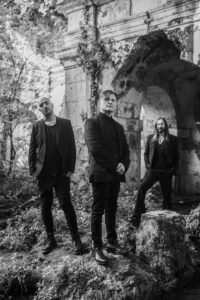
Photo: Elena Giaccheri
—Spettro was a very personal album about your messy life, Riccardo. You were going through a hard time — can you tell us more about it?
—Yes, absolutely. Spettro was probably one of the most autobiographical records I’ve ever written. I was going through a complicated period in my life, particularly on an emotional and personal level. There were relationships, disappointments, unresolved feelings and situations I couldn’t really make sense of at the time.
I think I was trying to make sense of the chaos around me through music. Writing became a way to deal with things I wasn’t necessarily able to express in everyday life. Some songs were almost like photographs of specific moments, while others were more about the feelings those experiences left behind. Looking back, I can see how much of myself I put into that record. It wasn’t always easy to expose that vulnerable side, but I think that’s also what made Spettro such an honest album. Sometimes you need to turn your darkest moments into something tangible just to be able to move beyond them.
—Although we’ve already heard a few songs from your new album, Amigdala, how would you describe it overall?
—I think Amigdala is probably our most personal and emotionally intense album to date. It’s a journey through memories, pain, desire, loss and everything that remains buried deep inside us. The album had a very long and complex gestation, almost two years. It was written, arranged and recorded during two incredibly intense years of touring, so in a way it grew alongside our experiences on the road. That also influenced the final sound of the record.
We wanted to approach the whole album in a more organic way, allowing it to breathe. All the drums were played entirely live, and the bass and guitars were also performed from beginning to end. There are no loops. It’s a less electronic approach to production, much closer to the way we actually sound on stage.
I think this was a very conscious choice. The scene is really saturated with bands performing with laptops, and we felt the need to create something that sounded alive, visceral and honest. We wanted to capture the energy of real musicians playing together, with all the imperfections and human elements that come with it.
The title refers to the amygdala, the part of the brain responsible for processing emotions and emotional memories. That concept became the thread connecting all 15 tracks. In a way, Amigdala is about how we carry our past within us, even when we think we’ve left it behind.
—For this album, you’ve been releasing singles every two to three months. What’s the advantage of using this method instead of releasing the full album with maybe just a couple of singles beforehand?
—I think the main advantage is that it allows us to give each song its own space and identity, rather than having the entire album compete for attention all at once.
In today’s music landscape, where new releases come out every day and people’s attention spans are increasingly fragmented, releasing singles over a longer period helps us maintain a connection with our audience and gives each track the opportunity to reach new listeners.
It also allows us to explore different aspects of the album, both musically and visually, through individual videos, artwork and promotional campaigns.
With AMIGDALA, we wanted the album to feel like a journey rather than just a collection of songs released on a single day. Each single represents a different emotional chapter, gradually revealing the atmosphere and the themes of the record. Of course, there’s something special about experiencing a full album for the first time, but we believe this approach makes the final release even more meaningful.
—The first single, “Kiss Me I Am Dying” has been really successful. Why do you think people have liked it so much? Is it because it’s more danceable?
Photo: Elena Giaccheri
—I think it’s probably a combination of different elements. “Kiss Me I’m Dying” has a very immediate and catchy structure, with a strong rhythmic drive that makes it more danceable, perhaps even more accessible than some of our previous songs. But I don’t think that’s the only reason.
There’s a contrast between its energetic, almost euphoric musical arrangement and its darker, more melancholic emotional core. I think that contrast is something people can connect with: you can dance to it, but at the same time there’s something quite unsettling and bittersweet beneath the surface.
Maybe that’s what makes the song work so well. It’s a perfect example of what we like to call our own approach to darkwave: darkness you can dance to.
—How did the collaboration with Spanish band Darkways on “Me, Myself and I” come about?
—The collaboration came about quite naturally. We had been following Darkways for some time and really appreciated their sound and artistic identity. We felt there was a strong connection between our musical worlds, so we decided to get in touch and explore the possibility of working together.
When we started working on “Me, Myself and I”, everything fell into place. We loved the idea of bringing two different perspectives and vocal identities into the same song, creating something that went beyond a simple featuring. The result was a genuine collaboration, both musically and creatively, and we’re very happy with how it turned out.
—The band has been remixed by our friends from Ductape and Aux Animaux. What kind of artists do you like for remixes? Is there any artist you’d like to remix your songs?
—We love artists who are able to take a song and completely reinterpret it, bringing their own identity and vision into it rather than simply changing its sound. We’re particularly drawn to electronic, industrial, EBM and darker synthbased sounds, but we’re always open to unexpected approaches and different musical worlds.
There are definitely artists we’d love to collaborate with in this way. Names like Boy Harsher, Kontravoid, IAMX or Agent Side Grinder would be fascinating choices. But honestly, we’re just as excited by the idea of discovering new artists through the remix process.
—This Eternal Decay has recorded a few covers, from Depeche Mode to The Chameleons, but I’d like to ask you about your cover of Angelo Badalamenti’s Twin Peaks theme. Why did you choose this song? Have you heard Xiu Xiu’s Plays the Music of Twin Peaks?
—I haven’t actually listened to Xiu Xiu’s Twin Peaks cover album, but I’m a huge fan of Angelo Badalamenti and the entire atmosphere and imagery of Twin Peaks.
In fact, those who have attended our concerts may have noticed that we always open our live shows with a tape of “Laura Palmer’s Theme”, performed on piano. And when we leave the stage at the end of the show, we play our own version of the “Twin Peaks Theme”, also on tape.
Badalamenti’s music has always had a special place in my imagination. There’s something incredibly haunting, melancholic and cinematic about his compositions, and I think that perfectly resonates with the emotional world of This Eternal Decay. It felt natural for us to pay tribute to that universe.
Photo: Stryga
—Now that the band is part of Fantaxtik Bookings, I imagine it’ll be easier to see you live in Spain. You’ve said that it was difficult to grow internationally without a big team or a major label behind you. Is the situation getting easier now?
—Absolutely. Having Fantaxtik Bookings on board is definitely an important step forward for us, especially in terms of developing our presence in Spain and building stronger connections with the local scene. For many years, we’ve been doing almost everything independently, from booking and promotion to management and communication. It’s been rewarding, but also quite challenging, especially when trying to expand into new territories without the support of a larger structure.
Now we feel we have a more solid foundation and the right people working alongside us. Of course, there’s still a lot of work to do, but having a dedicated booking agency makes a real difference. We’re looking forward to playing more regularly in Spain, reaching new audiences and building something lasting there.
—We lived in Italy for a few years, so we’re curious: how is the dark scene doing there right now?
—The Italian dark scene is still alive and kicking, although it’s quite fragmented. There are some great bands, promoters and small independent labels keeping things moving, but the scene is relatively underground and the live circuit can be challenging. That said, there’s definitely a passionate audience, especially in cities like Rome, Milan, Bologna and Turin. I think there’s still a lot of room for growth, and it’s always exciting to see new projects emerging and international connections developing.
We’ve been part of this scene for quite a while now, and we’re doing our best to keep it alive and bring Italian darkwave beyond our borders!
—Next year we’ll have the chance to see you twice in Spain, first at Niebla Sónica festival and later at Dark City Fest. What can our readers expect from those concerts? The band has said that live performance is your absolute strength, right?
— I honestly think the band has never sounded as good as it does right now. Maybe it’s the result of the countless live shows we’ve played over the last few years, but also of the increasingly strong and warm response we’re getting from the audience. That kind of energy pushes you to give everything you have, to constantly challenge yourself and bring the very best of yourself to the stage.
For these next shows in Spain, people can expect very direct, powerful sets, designed to make you dance, but also to make you feel something deeply. These are two very special and incredibly important occasions for us, and we want to make the most of them.
We’ll give 300% of ourselves. No less!