Preparing the interview with Jérôme Reuter—the musician who records under the name ROME—wasn’t easy. Since 2006, this neofolk/post-industrial project has evolved, breaking down genre barriers while delivering works of an unusual depth. That’s why, and even though I already knew his albums well, I set out to dig deeper into them to try to make the interview live up to the artist’s level. And after a month of intense listening, I can say that few discographies can boast such quality, consistency, and courage. The next chance we’ll have to see him live will be at the Dark City Fest, which will take place on May 30 in the sunny city of Benidorm.
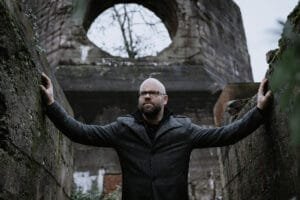 —You were part of an oi! band called The Skinflicks. How do you remember those days? In an interview you said that there was a lot of violence in the concerts, can you please tell us more about this?
—Yes, I was really into punk music when I was young. I liked the energy. We were just kids back then, obviously. I was 16 when I formed that band. I remember the good times with my friends more than anything else. It was good fun to travel with your mates around Eurpe, rock’n’roll, wreck a city and leave… But, yes, one of the reasons it stopped being fun was indeed the growing violence in the scene overall. These were different times completely, though. It’s over 25 years ago. It’s hard to imagine all that now. Nowadays that scene is very much different.
—Your next band, Mack Murphy and the Inmates was closer to what you did later with ROME. How did you get into neofolk?
—It was via friends that I got familiar with the work of the originators of the neofolk genre. This was in my late teens, I believe.
—What do you think of the material you recorded with them now?
—Looking back on it, of course, I hear how young and unexperienced a lot of that was, but it was a great learning period.
—In 2005, you gave up your acting career in favour of music. Have you ever regretted this decision?
—To be fair, I didn’t really have an actual career to give up, but I was partially set on that path. I was doing more and more theater work at the time and really enjoying it. In the year leading up to the first ROME recordings, I was part of several plays and really enjoyed the work and was seriously thinking about enrolling in acting school, but I realized I couldn’t live without music. I still have many friends in the acting world from those days, who now have been professionals for many years, and I know exactly what that lifestyle is like, but I don’t miss it. I always knew I couldn’t do both music and theater to the same degree.
—In an interview, you said that discovering the industrial scene was quite important for you, because “It just erased pretty much all my preconceptions of what music can be like”. How do you think that industrial has influenced your music?
—I think it just made me call out any preconceived concepts of music in my mind and opened me up to other ways of going about sound. There was always a spiritual dimension to early industrial for me. I guess that’s probably what I meant. I’m not talking about industrial rock, but rather the experimental side of the late 70s avantgarde and therafter.
—Your first EP was entitled Berlin and was centered on a specified time in the the city’s life. Why did you choose that time/topic for your first EP? Was it a period you were more interested in? How do you choose concepts for your albums?
—No, that title was rather random. There is no real concept to that EP. Those were my very first recordings back in 2005. I had no idea ROME could become an actual band or whatever. I was just fooling around in the studio. As for themes and concepts… I just follow my curiosities.
—In Nera your first album there is a quote that says, “A Noi e mancata soltanto la fortuna non il coraggio”. Do you think that this can summarize Rome’s career?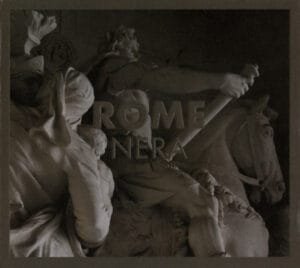
—Haha, well, I sure hope not! But it certainly feels that way sometimes.
—In Confessions D’Un Voleur D’Ames, we find songs like “Wilde Lager” with an influence reminiscent of Leonard Cohen. You said that you used to listen to artists like Cohen, Dylan and Townes van Zandt in your dad’s car. Did these artists help you learn how to tell a story through a song?
—Yes.
—Masse Mensch Material is a bit more “pop”, the songs are a bit catchier, and you start adding different influences. In that sense, Rome has constantly changed, from an album to another. How do you explain this constant change? Do you plan it before starting an album, or does the concept take you in different directions?
—Both, I guess. I do the music I want to hear. So usually if I do something more accessible, I tend to go for something more cryptic after. Or if it is “loud”, I revert to something rather intimate on the next.
—Flowers from Exile was based on the Spanish Civil War. Being Spanish, can you please tell us more about the composition of the album? What sources did you consult?
—That’s mostly (auto)biographical work relating to my great uncle who fought in the Spanish navy against Franco and was chased into exile. He is the guy on the left of the cover.
—In Nos Chants Perdus, there are some some chanson influences, on tracks like “La Rose et La Hache”, and you’ve said you’re a fan of Jacques Brel. He was also a very expressive singer. Was he an influence on how you perform?
—I dare not say he was influential on my performance on stage. It’s all rather underplayed with me compared to Le Grand Jacques. But his whole lifestyle was eye-opening to me as a kid for sure. I love that man.
—Die Æsthetik Der Herrschaftsfreiheit was one of your most ambitious projects, a triple cd released by Trisol. First, you worked with Cold Meat Industry, but the rest of your albums have been released by Trisol. Do you always have support from your label for releases this ambitious?
—Yes. Trisol is my home until one of us drops dead. They have had my back from day one and through so many tough times! They have always been supportive with ambitious releases as well, yes.
—Hell Money, instead was a more intimate album. After writing so many albums about history, did you feel that you needed to write about yourself?
—Yes, exactly. I needed to work through some personal stuff on that one.
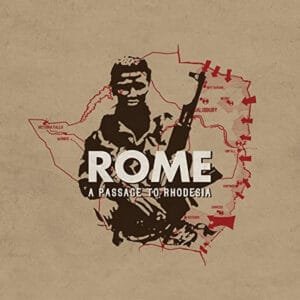 —You said that you have already finished A Passage to Rhodesia several years before its actual release, but you didn’t like it. What happened that you changed your mind? Or did you just change the record?
—No, it wasn’t finished but I had the basic idea for the record 7 years before the actual release, yes. It was a completely different record then, though. I had a few of the main songs ready, but something was wrong. I had not found the right voice for the narration, really.
—On this album and in your work in general, you never offer black-and-white answers to specific issues. Is it easy for you to kind of understand or empathise with all sides of the stories?
—I try to put myself into different shoes, yes. Which sometimes requires a lot of research.
—You said that you read a lot andn you have composed an album inspired by William Shakespeare’s Coriolanus. What are the main influences in your writing?
—Oh, they vary a lot. Once I have my horns locked on a particular theme, pretty much anything that comes my way can be worked into it.
—Can you please tell us more about your Martial Ambient Works series that started in 2019 with Käferzeit? Do you see House of Stone as a precursor?
—Yes, it is. That one awoke my interest in that kind of work. That’s how that series got started. There is a meditative quality to those releases that I thoroughly enjoy while working on it. It is something I do completely on my iwn, without anyone involved in its production or composition.
—In The Lone Furrow you collaborate with some friends. You said that you wanted to enhance and diversify the album as much as possible, without changing the essence of your songs. How did you choose the guests for the songs?
—The guests on the record were mostly musicians whom I had met on the road over the years. Indeed, I tried to make them fit in there, rather than having a feature that I need to work a song around.
—About Gates Of Europe, your album from 2023, centered on the Ukrainian war, you said that you needed to say something musically that would remain. Don’t you think that music in general, is too far from reality? I mean, we are living through complex times. but almost nobody is singing about this.
—Yes, a lot of people don’t want to put their foot in it and are afraid of the backlash. I’ve had a lot of shit dumped on me for taking sides and speaking up. But I knew that would happen, it’s all part of taking a stance.
No, I don’t think art is too far from reality, everyone should do as he pleases. I generally would stay away from any political statements, but this war is different. I don’t want ROME to become some sort of political band, that would be horrible. It’s all about trying to make something lasting and universal, so I don’t want to spend my energy in the trenches of today’s petty confrontations. But with my brithers in Ukraine being attacked – there was just no way I would remain silent.
—Your 2024 album is called World in Flames, but sadly the situation is now even worse. As a person interested in history and armed conflicts, how do you see Europe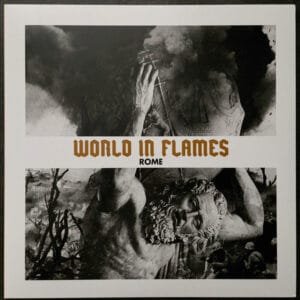 right now? Are you going to write about what’s happening today?
—I don’t really plan to do that because I have done it quite a bit recently- I am not quite sure where the road is going to take me at the moment. But then again, I tend to deal with current issues in my work wether I want to or not. So, I must assume that the ongoing turmoil on the European continent will find its way into my work in some form or other.
—2025 was one of your most prolific years, releasing four albums of new material. Did you have more time to focus on composing?
—We used the 20th anniversary year to get quite a few things out of the pipeline, indeed. I am currently focusing on live touring rather than songwriting, so I am not sure there will be any new release this year.
—What are your plans for this year?
—We are working on setting up a very unique tour in special locations later this year- unfortunately I’m not at liberty to disclose any details yet
—What can we expect from your concert at Dark City Festival?
The set will likely include songs from all eras of ROME… we are still working it out, to be honest. I am currently touring the United States with a solo set, so as soon as I’m back home, we’ll start rehearsing for the festival season.