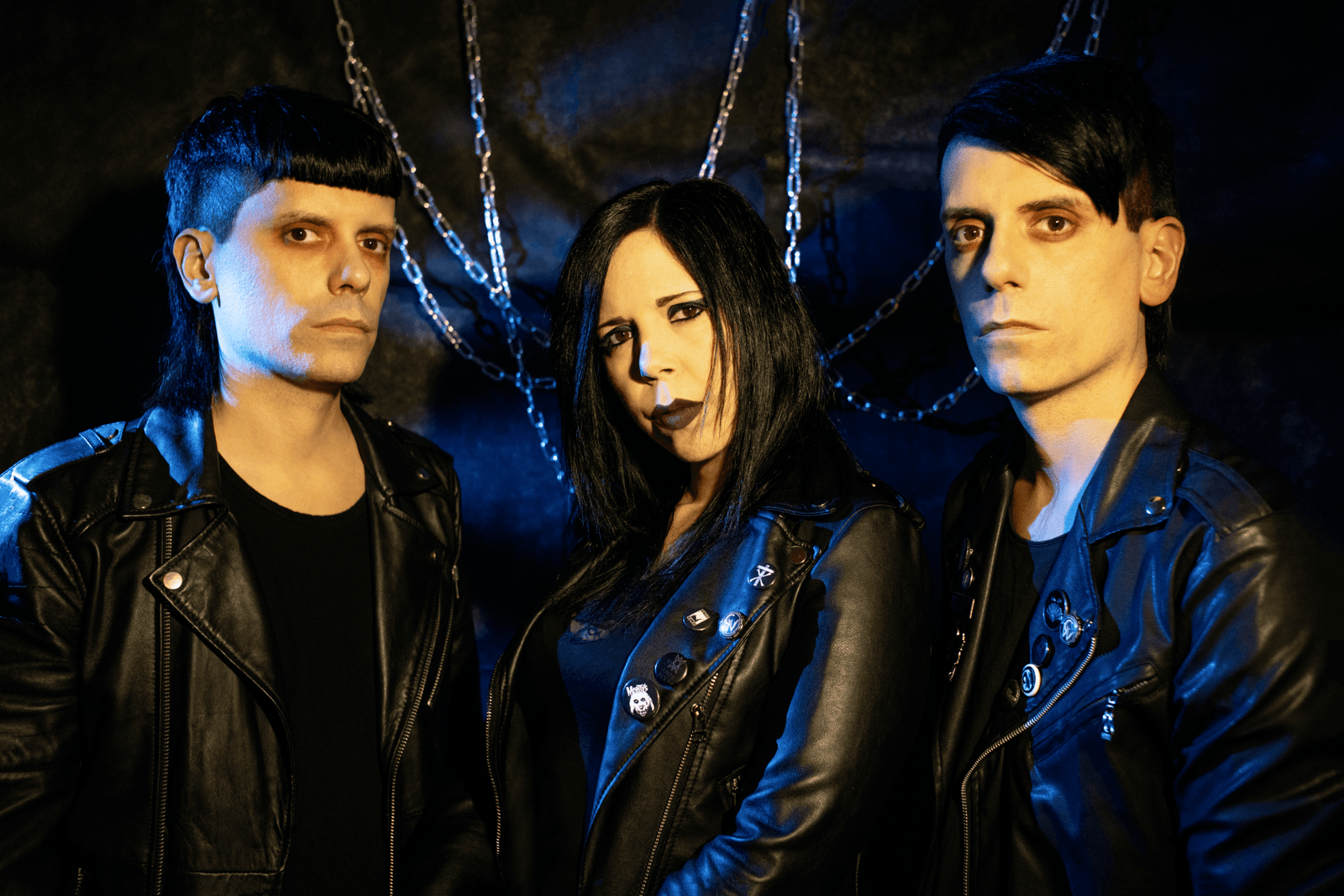
There was a moment in the second half of the last decade when the Italian darkwave band Ash Code’s rise to the big leagues of the dark scene seemed unstoppable. The trio formed by Claudia and brothers Alessandro and Adriano were playing at every major festival and touring Europe and Latin America on successful tours. But then the pandemic hit and the project hit the brakes while the family grew. Following a superb EP produced alongside techno queen Ellen Allien, Ash Code released their fourth album last year, Synthome, a mature and complex work that proves the band still has much to say. They will perform at the Levantine festival Dark City Fest, that will take place on May 29-30 in the sunny city of Benidorm.
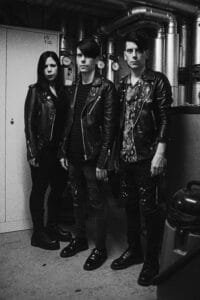 —Alessandro, you and your brother Adriano were in a rock band called Low-Fi. What can you tell us about your first days in a band?
—Alessandro: Being brothers, we have always played together. The early bands, including the one you mentioned, served as a training ground to understand how to play and what to play. Our past experiences helped us focus on what our true nature and music really were.
—A few years ago, we saw you playing with Diaframma and Neon, two of the most legendary Italian Dark bands, in Milan. Were you influenced by them? Are there any Italian bands that have been important to you?
—Alessandro: We remember that night well. In general, we didn’t have been influenced by Italian bands in the development of our sound. The scene here has always been quite small and our listening has been more focused on English or American bands.
—Ash Code started in 2013 when Alessandro began working with Claudia on some songs from Low-Fi. In some reviews I read that Claudia adds the taste to the songs and Alessandro adds the sensibility. Do you agree with this?
—Alessandro: Actually, I had some demos that hadn’t been used for that project but that I still believed in. I was at a standstill, stuck. By chance, Claudia added some synthesizer melodies, and that’s how “Dry Your Eyes” and “Unnecessary Songs” were born out of nowhere.
—Is the name of the band, Ash Code, a reference to Vesuvius?
—Claudia: At first, we just liked how those two words sounded together. There is a reference to Daniel Ash , whose music we are fans of, and we also liked the fact that, being of Neapolitan origin, we have Vesuvius nearby , so the ashes, volcanic imagery felt fitting. So yes, there is a reference to Vesuvius, but it’s not the only one.
—After the release of two successful singles, you started working on Oblivion. How do you remember the days of composing your first album?
—Alessandro: It was a magical and very fast process. After the release of “Dry Your Eyes” in January or early February, I don’t remember exactly, we were invited to open for She Past Away in Naples at the end of March 2014. Just to have enough songs for that concert, at least six or seven, we quickly composed what would become Oblivion. It was incredible, we basically wrote the album in two months. Unfortunately, that fast and effective process never repeated itself. Later releases required months, even years to compose.
—The lyrics of “Unnecessary Songs” say, “Where nothing is created, it’s all a tribute, not even a crime.” Do you think that this song is more relevant today with everything that’s happening with AI?
—Alessandro: When I wrote those words, the AI debate hadn’t emerged yet. There was a trend, especially in Italy, of copying or mirroring styles and music that were fashionable and successful in other countries, simply transposing them into Italian, with no originality whatsoever.
—The first cover you made was “I Can’t Escape Myself” from The Sound. As we are fans of the band, why did you choose to cover them and especially this song?
—Claudia: We needed to find a song that was particularly powerful and that hadn’t yet been covered in a darkwave and electronic style with a drum machine. This one was perfect. It was a really well-chosen cover, and DJs loved it immediately. We even had the chance to perform it in front of The Sound’s original drummer, who has since become a friend.
— Do you consider yourselves nostalgic for the 80s or just for the past? Do you consider being nostalgic a crime?
—Alessandro: Looking back at the past with a certain longing or nostalgia is perhaps a very human feeling. In general, we are fascinated by things from the past, also because we experienced most of them. Modern times don’t captivate us in the same way. As for “nostalgia being a crime”, that’s actually a line from one of our songs, where I’m really talking to myself, telling myself to look forward, because nostalgia can lead to a mental state that isn’t exactly healthy.
—You said that both Oblivion and Posthuman were inspired by natural landscapes. In which way are you inspired by this?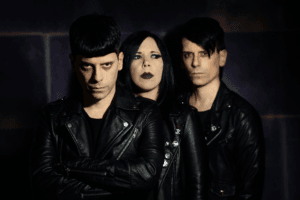
—Alessandro: I’m not entirely sure I said that in the past. Posthuman was inspired by Claudia’s philosophical studies. As for Oblivion, part of the lyrics, which revolve around the philosophical concept of oblivion, were inspired by some foggy natural landscape videos I found online. By pure coincidence, one of those videos, posted by a now-defunct production company with very few views on YouTube, ended up in the official Oblivion video. I was so fascinated by those images that I contacted the company, which no longer existed, and they granted us the use of the footage for free. We were very lucky. Essentially, the song was inspired by images that, by pure coincidence, also ended up in the video.
—In Posthuman, some lyrics speak about the role of humanity as the order of things is shifting, quite a heavy subject. How do you choose the subjects for your albums? Do you consider the theme before the music?
—Claudia: For our albums, at least these first four, including Fear, we have always looked for a central theme to focus on, even if not every song aligns with it. Yes, we were fascinated by the relationship between humanity and machines for Posthuman. It was 2015, and we weren’t yet at the center of the AI revolution as we are now. But we already sensed its dangers and limits for human evolution. Things have only gotten worse since then. In the future, we might decide to make albums without a central concept, just collecting songs.
—Claudia, you studied philology and have expressed that philosopher Friedrich Nietzsche’s Untimely Meditations has acted as an aesthetic influence on the trio’s outlook and music. What are other influences from philosophy that can be found in Ash Code’s music?
—Claudia: The second album was inspired by the concept of the ‘posthuman’ as described by the Italian-Australian philosopher Rosi Braidotti. We were particularly interested in the relationship between humanity and nature, which in the modern era has almost completely disappeared, as the focus has shifted back to subjectivity, as in humanism, leaving nature in the background, almost lost. What we hope is a return to our roots as nature. In the latest album, Synthome we draw on the concept of the ‘sinthome’ in the Lacanian psychoanalytic interpretation, specifically the new term coined to describe the knot through which a subject finds a way not to go mad. In our case, that escape is the passion we have for music. We put the Y in the term as a reference to our musical instruments.
—I think there is an important evolution in your music from Posthuman to Perspektive, even bigger than from the first album to Posthuman. Do you agree?
—Claudia: I think there has been a natural evolution, something that happens to every band. Different listening, different readings that influence you and push you to move forward, to experiment, to grow. Looking at our path now, after more than ten years, I can see that not everything was perfectly focused or linear. Since Oblivion is our best seller, maybe it would have been easier for us to replicate its sound in next albums, we might have gained more audience that way.. But we have no regrets, because we have always done what we wanted: experiment with music, words, and languages without any remorse. And we are actively working on new things these days.
—Talking about the electronic side of Ash Code, you said that sometimes you build the songs around the beat. What is the perfect beat for Ash Code?
—Alessandro: I don’t know what the perfect beat is, it’s still something I search for every day. Beyond the sounds and kits we use, samples from libraries, records, or live recordings, the inspiration for a beat can come from something I hear by chance on the subway, a phone ringtone, or a film soundtrack. When I find something that interests me, a spark goes off. Otherwise, I sit in front of a drum machine trying to compose something new. The longer we go, the harder it is to find an interesting beat.
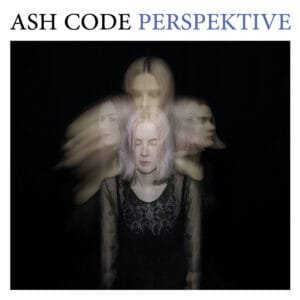 —In Perspektive, the band introduced a new handmade instrument built by an Italian artisan that is called a Micro-D. Is it important for you to sound “different” from other darkwave bands?
—Alessandro: I’ve always wanted to bring something distinctive into the live show, something special. This instrument, which is both percussive and made of metal sheets, bolts, strings, and springs, became the foundation of the song ‘Perspektive’ because of its particularly interesting sound. We’re not currently performing that song live, so we’re not using the instrument on stage anymore, but it remains in our arsenal whenever we need more metallic or industrial sounds. Yes, our main goal is to sound different from others.
—In Perspektive, you sang with Luca from Die Selektion. Why did you choose him for the part in German and how was the experience of working with him?
—Claudia: We have great respect for Die Selektion and for Luca, whom we have known since the very early days of their band. We wanted to write a song in German just for the fun of it, we love how the language sounds. We also needed someone to sing the chorus, so it felt natural to ask him. We are connected to him through esteem, friendship, and admiration for his work. We’re very happy with the result.
—In most of your albums (sometimes in second or third editions) you include remixes by other artists. Do you think it’s the best way to complete an album? Is there any artist you would like to remix your work that you haven’t worked with yet?
—Alessandro: Remixes allow for a different perspective on a song. When others remix our tracks, it’s interesting and fun to see what the remixer found most important or compelling, because obviously not every element is preserved. The song gets deconstructed, and often only the vocals, the bassline, or a few other elements remain. It’s very enjoyable. But it’s also interesting and fun for us to remix others, because it gives us a chance to open our minds, to see how other artists build their songs, use their sounds, construct their drums and basslines, and challenge ourselves against their work. So it’s a doubly interesting exercise, having others work on your songs, and working on the songs of others.
—The Fear EP was your way of coping with the pandemic situation. I think it’s weird that such dramatic times didn’t produce many songs about it. Do you think that music is not reflecting reality enough?
—Alessandro: During that period we were working on a new album, but the pandemic turned everything upside down. The music we had didn’t feel right anymore, and the songs we’d written no longer reflected those times. So we focused on doing something else — a series of livestreamed events to raise funds against COVID-19. Once that first year was over, we found ourselves with new songs that we felt described us and our reality better. We had these 3 tracks plus some excellent remixes by important names, and we decided to make an EP rather than an LP. It was a strange time. Despite having so much time on their hands, many artists, including us, just didn’t have the enthusiasm to compose or produce.
— When you are talking about livestreamed events, you refer to the Gothicat festival, right? How did you get the idea? What happened to the project of a physical festival?
—Adriano: We did several editions through the brand I manage. The idea came after a solo livestream by Ash Code that drew more than 1,000 simultaneous viewers and raised around 2,000 euros. Since we had worked and played with pretty much everyone in the scene, we started thinking about what we could do to help support research. We asked each band to contribute an unpublished live video, and put together a kind of virtual festival aimed at raising funds effectively. The first editions were massive, the very first one had over 10,000 people connected across Facebook, YouTube, Twitch and other platforms, and we raised a lot of money for charity organizations. The physical festival idea has unfortunately been put on hold for now. After the pandemic, the high cost of flights and the difficulty of finding affordable venues made it too expensive to organise, even a small festival with just four or five bands. We ran the financial projections and it was just too costly, especially while still wanting to keep it a charity event.
—How was working with Ellen Allien on the EP Dance and Kill?
—Alessandro: Everything started on Instagram, where she mentioned she had added us to one of her playlists. We became online friends, and by chance we ran into each other one morning in Berlin. It all happened very naturally. She is a legend, we have always been fans of her music. The fact that we made something together is still incredible to us. Even though it was just a three-track EP, working with her on the music, the artwork, the videos, and the promotional photos we shot together was a truly rich experience. It’s genuinely one of the highlights of our career.
—Why did it take you seven years to release a new album? I read in an interview that the band almost broke up.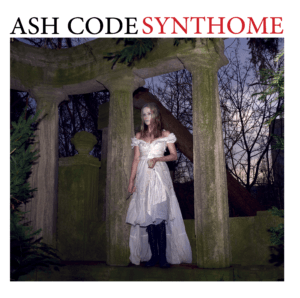
—Alessandro: It’s not easy to keep a band going for so many years with consistency and commitment. There are daily sacrifices to make in order to prioritise the band touring, travelling and producing. There were times when other things had to come first, especially since all three of us have jobs outside of music. So yes, we came close to breaking up and were inactive for several months, but we came back.
—The new album has been mixed again by Doruk Ozturkan. Is there anything special that you like about his work?
—Alessandro: Beyond a great friendship, we consider Doruk a fantastic producer who is very easy to work with and who consistently delivers exactly what we’re looking for in just a few hours. We send him the tracks and within a day, two at most, the song is done, not because our compositions are particularly easy to mix, but because he knows exactly what to do and how to do it. He is always our most effective option. In the future we might work with other people, there are producers we’d love to collaborate with, but Doruk is the one with whom it is simplest and easiest to get what we have in mind.
—You said that the new album shows a new side of Ash Code. How would you describe this side? Mature?
—Claudia: Yes, certainly, we are very different people from who we were seven or eight years ago. We have different lives, different priorities. It’s no secret that we have all become parents, and we try to manage our career while living it alongside these new lives. That has made us people who look at what happens in life from a different perspective, and that is definitely reflected in the songs. It’s a different side of us.
—One of the songs, “Ángel Oscuro,” has lyrics in Spanish. You said that it was some kind of recognition for your Latin fans. What can you tell us about your experiences and tours in Latin America?
—Alessandro: Yes, it is really a tribute to them, and also to the fact that we love the Spanish language and how it sounds. We toured Latin America in 2017 and again in 2022, two magnificent experiences. We met so many great people, saw so many wonderful things, and the concerts were special. Of course, for a European band, touring through many countries in a week is always exhausting. The last time, we played four shows in four different countries on four consecutive days without really sleeping, just dozing on planes. We pushed beyond every limit, and we probably couldn’t keep up that pace now. But we can’t wait to go back. Those concerts were something special!
—The video for “Ángel Oscuro” was made again by Elio De Filippo. You have worked with him on many videos. Do you think he is the perfect director for you?
—Alessandro: We have collaborated with him on almost all of our videos. He is someone very open-minded who gets genuinely excited by challenges and by what I often propose to him. There is always a desire to go beyond the standard music video, to experiment with older technologies, unusual settings, new ideas. He never steps back, and he’s always very available. He also always brings his own interesting ideas. I’d say there’s a daily exchange between us, we talk almost every day, share thoughts about cinema and art, and send each other messages constantly.
—And your last release was a remix by techno producer Dave Clarke. Why him? Are you into techno music too?
—Alessandro: It all started with a casual encounter in Naples a few years ago. From that dinner, a relationship was born. He had expressed interest in remixing one of our tracks , and we’re talking about a very important techno producer who has remixed some massive names. We’re very happy he did it with our song too. The result is really powerful. We’re also thrilled that he invited us to play at the annual festival he runs in Amsterdam, where we’ll be performing this coming October. We can’t wait!
—Is it difficult to be a family and a band?
—Claudia: Yes, it’s a much harder challenge, everything has to be calculated with minimal margin for error. For live shows, we now need to know well in advance not just the performance time, but also where we’ll sleep and eat, so we can manage all the logistics precisely. On top of that, we travel with a babysitter to look after the children, it’s not simple at all. But we’ve managed it over the past year and hope to keep doing so, because we know how important our live music is. Everywhere.
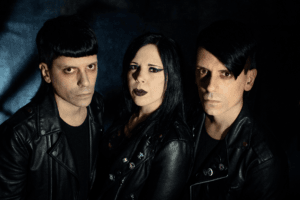 —Talking about families, as you said, a new member arrived last year. How has fatherhood changed Ash Code? “Fire,” “Run in the Dark,” and “Living for the Sound” are about motherhood and new life, aren’t they?
—Alessandro: Yes, those lyrics, especially “Run in the Dark”, are full of references to motherhood and parenthood, even if always through a somewhat dark lens. Claudia and I are parents to a wonderful child, and Adriano also became a father a little earlier, to a daughter, so all three of us are living this moment. It makes managing the band much harder, it’s a daily challenge, but so far we’ve managed to keep touring without problems. We hope it stays that way, because we genuinely believe that live activity is essential.
—Time for the side-projects. Claudia, you with two other girls created the band Neila Invo. What did you want to express with that new band? You left it because it was difficult to keep both bands and take care of the baby at the same time, didn’t you?
—Claudia: The original idea for Neila Invo came from Elettra and Valeria, the other two girls. I joined later because they needed a keyboard player and someone to handle the arrangement and structure of the songs. So I took care of both the synthesizers and the sequences. As for what we wanted to express, I also contributed to the conceptual side of the album, which deals with alienation — a theme that really interested me, because as artists we always feel a bit alienated in today’s society, which wants everyone standardised. And we clearly feel different. Unfortunately I do not have enough time to properly follow both projects, so I had to make a choice. When you become a mother and your child is still small, you are very absorbed by him. To do one thing well, I had to let go of the other, with great regret.
—What can we expect from your concert at Dark City Fest?
—Alessandro: We haven’t played in Spain for a few years, even though we already have concerts scheduled for 2027. We are very excited to play at Dark City Fest, the past editions were equally incredible. We can’t wait to get on stage, enjoy the show, and enjoy our fans, but also to watch the other bands on the lineup. So we’ll see you there… on stage and off