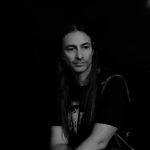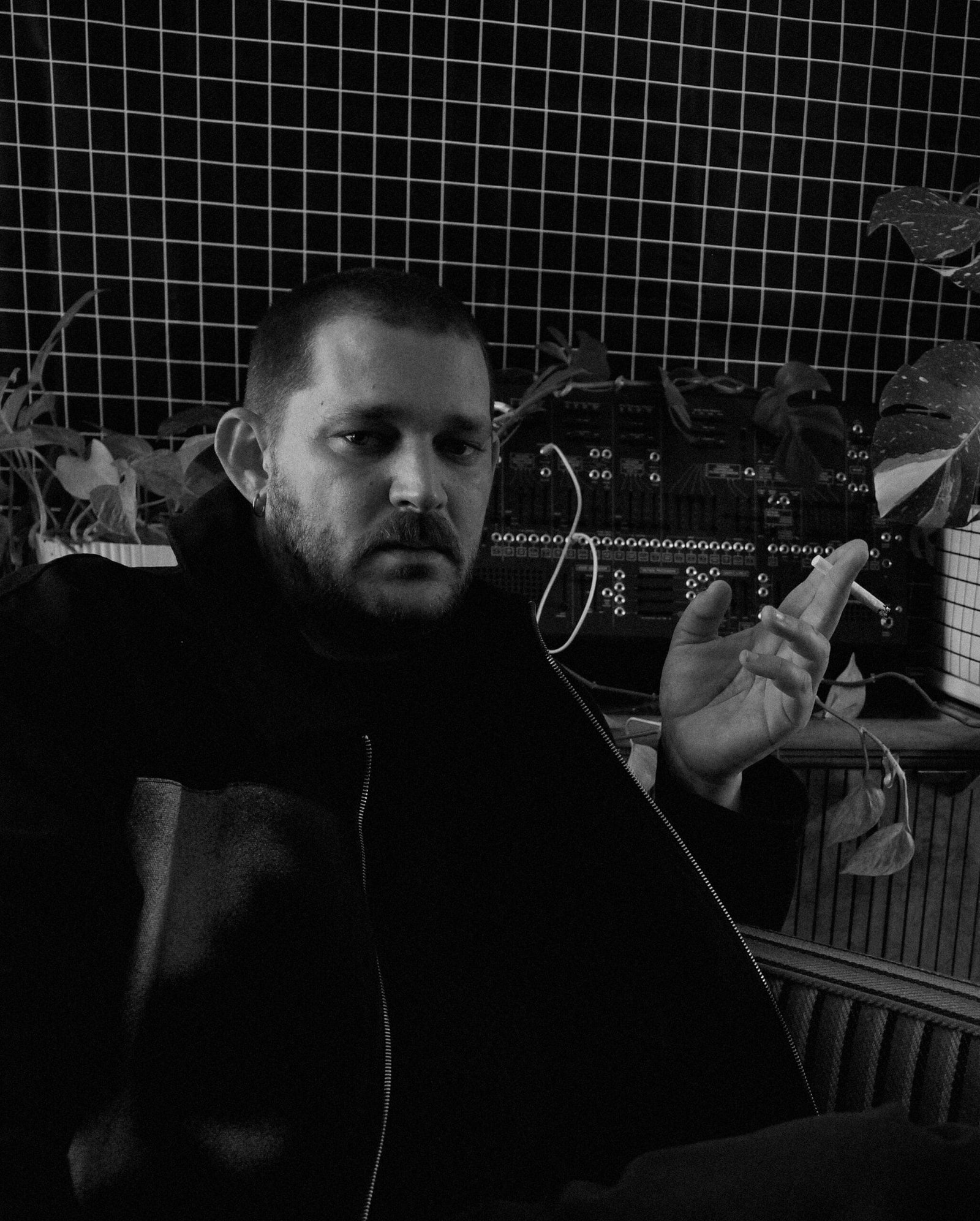
Nic Hamersly, with his project Ortrotasce, has been demonstrating for over fifteen years a special sensitivity for composing danceable yet emotional tracks. His music sounds modern while also evoking past decades. Thus, it is no surprise that a label well-acquainted with the past, such as Dark Entries, released his latest album, Dispatches From Solitude, which contains eight gems to dance with tears in your eyes. He is one of the artists we don’t want to miss at the Ombra festival, taking place this weekend in Barcelona.
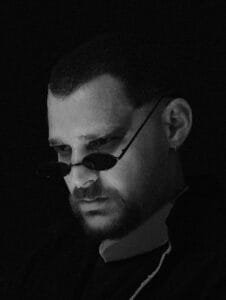 —What made you start Ortrotasce in 2009? You were already playing in other bands like Resi Noth, right?
—That’s correct. During that period of my life, I found myself increasingly drawn to early electronic music, despite having grown up playing drums in various punk bands. When I moved to Portland, Oregon in 2008, I didn’t yet know many musicians in the area, so I decided to start my own project. I experimented with a few different names before ultimately arriving at Ortrotasce.
—You said that you were inspired by the label Three One, and from there you started listening to electronic music. Can you please tell us more about this as, honestly, I never listened to any Three One G record.
—This was actually back in high school. It was a label based in San Diego, California, known for its catalog of noise rock, powerviolence, experimental, no-wave releases. Bands such as The Locust, Arab on Radar, and Holy Molar quickly became some of my favorites. Many of these artists incorporated a strong synth presence in their recordings, which played a significant role in shaping an interest in underground electronic music.
—With the AKA Warmline you released an album, entitles Sad, in 2011. The music is more post-punk. What can you please tell us of this project?
—This was another solo project I developed while living in Portland. I wanted to create something more guitar/bass/driven, and I’ve always had a naturally restless creative energy. I get bored easily, and making music is everything to me, so exploring every corner of what I love musically seems natural.
I wrote all of those songs in a small room beneath the stairs of the house where I lived, paying $150 a month for the space. It was just myself, a sleeping bag, an acoustic guitar, a bass, and a laptop. It was an undeniably low period in my life, and that shaped both the mood and the inspiration behind the project. The production is horrid, and I’m not particularly fond of the release in general at this point, but some of the guitar parts still resonate with me. “Calling out” & “Empty” in particular still evoke something meaningful. Melancholic, in a way I’ve always appreciated.
—What´s the meaning of Ortrostasce? It should be pronounced Or-tro-task, doesn’t it?
—Correct! It’s both a blessing and a curse. The name has no official meaning and is entirely invented. Easy to find, difficult to pronounce. For me, it carries shifting interpretations. “the one who slips between meanings,” or “he who wakes in other versions of himself.” Depending on the night.
It wasn’t something I carefully planned or analyzed. It simply emerged, arriving on its own, or perhaps never fully arriving at all.
—In the album Past and Present, you put together your tracks from 2010 to 2012, right? The music is dark and gloomy. What were your influences back then? Were you listening to a lot of goth rock (well, you have another post-punk project at the time)
—Past and Present compiles tracks from that period. At the time, I was drawn more to a more experimental electronic/ minimal synth sound than to traditional goth rock. While I did have a post-punk project, the darker, synth driven atmosphere of these tracks were shaped primarily by my interest in synthesizers and drum machines rather than any specific genre. I was listening to artists like Staccato du Mal, Opus Finis, Felix Kubin, and Doxa Sinistra. It’s perhaps obvious, ha, ha, ha!! but I’ve always been drawn to melancholy. Always and forever
—Then you released 11/13 and Phase Four, I guess these compilations reflexes your instrumental evolution and you movement till a more danceable material. How was that evolution during these days, according to you?
—Most of these tracks were created around the same period as Past and Present. I moved back to Florida in 2013, which is when I recorded the tracks for Phase Four straight to tape. While the production is raw and harsh, I still have a strong attachment to that work. I’m constantly creating and exploring new sounds to keep the process engaging for both myself and the listener, though primarily for me. Despite this, I believe my overall sound has remained consistent throughout.
—You released a split with Silent EM, who is also your friend and is playing too at Ombra. We already asked him about you, so is your turn of telling us what do you like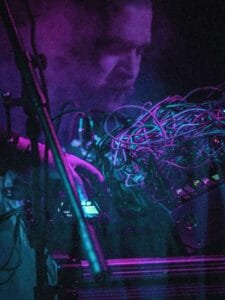 in his music?
—Jean has become a close and valued friend. I don’t have many deep personal connections within the synth scene, but we immediately clicked.
From a musical perspective, he’s slept on. A FORCE! In terms of writing, mood, and lyrical content, his work is entirely original, simultaneously nostalgic, authentic, and gushing with raw energy. I’m also playing guitar for Silent Em at Ombra and later Euro/Uk Dates. Honored to be part of his performances. Exceptional performer. NOT TO BE MISSED.
—In your first album and in Monument Of Existence, you compose in a wide range of musical genres from cold wave, post-punk, EBM, ambient… Being an artist that have worked on so many different genres, what are, according to you, the elements that you can always find in an Ortrotasce track?
—Across my work, regardless of genre, I think the defining elements of an Ortrotasce track are atmosphere, emotional honesty, and textural depth. Whether it’s cold wave, post-punk, EBM, or whatever, I’m always focused on creating a sense of space and mood, layering sounds to evoke feeling, and maintaining a consistency in tone and energy that reflects my personal vision.
—From 2017 to 2022 you released nothing. Were you working in a different project?
—I have many projects, a byproduct of my restless, A.D.D. nature. Much of my time is spent not writing conventional music at all but delving into the depths of electronic instruments. Eurorack and modular synthesis being my primary playground. Even in moments of apparent stillness, I’m conjuring. Building tracks for other monikers, exploring hidden corners.
I have a few other projects that wander down different paths. Skinner Follie, Hinkie Pearl, Mr. Service. Each a distinct experiment, a fragment of the ever-shifting world I’m creating, Musically.
—Your “come back” EP I Remember My Past Life In Great Detail is a bit more post-punk/new wave. Can you please tell us more about this enigmatic EP?
—Ah, yes! I really love these tracks. I originally performed them live under my Skinner Follie moniker, but I chose to release them as Ortrotasce to deliberately shift expectations and take listeners in a completely different direction. My goal was to create something more primal, worldly, exotic/dark and mysterious, with orchestral textures and unconventional sounds woven throughout. I wanted each track to feel unique, to exist as its own distinct sonic world.
—Last album released by Dark Entries, a label that it’s famous for its 80s reissues. Are you also a fan of the label, are you interested in old material?
—I’ve always been a fan of Dark Entries. Josh is fantastic and a real pleasure to work with. I tend to gravitate toward older music and have a genuine preference for it.
—Dispatches from Solitude is more synth pop. What made you move in this direction?
—I just needed to move on and explore different directions. I wouldn’t call it synth-pop. Haha, but overall, the material is a bit less gloomy than my previous work.
—Your music has a nostalgic vibe. Do you think that now a days we are living in a too nostalgic society?
—I appreciate that, truly. Without sounding too harsh, I feel that many modern synth and goth acts lack a sense of nostalgia. I’m drawn to the feel and energy of music from the past. There are depth and character that’s often missing today. Too often, contemporary music feels overly polished, without connecting to what came before, Perhaps that even applies to me at times. Regardless, I give full credit and respect to the music of the past. It’s where so much of my inspiration comes from.
—Dispatches from Solitude was recorded partly during Covid, how did living isolated influenced the composition of the album?
—That period helped me a lot both creatively and emotionally. Covid was such a strange, disorienting time, but the isolation gave me the space to really focus. I ended up writing and recording pretty much all the tracks during that period. I also locked in on production. I still feel I lack in that department, however.
—Some keyboards remind me of Martial Canterel, was he an influence in your music?
—Haha, yes. Even during my earliest recordings. Sean demonstrates remarkable use of modular synthesis, as well as a strong sense of melody and structure.
 —I think that the influence of italo disco is more evident in this album, although it was already present before. What do you find interesting in the genre?
—Captivating melodies and rich vocal harmonies.
—What kind of gear did you use for the album?
—Most was created using Eurorack and the ARP 2600M for sequences, basslines, and textural rhythmic elements. Drums were primarily samples and programmed in Ableton. For pads, leads, and other sounds, I relied heavily on the Korg Wavestate, which I absolutely love for its versatility and sample-based collection of everything you could ever want.
—You said that “The freedom of being alone is glorious” about working by yourself. But you also play in a band, called Chlorinefields. With them you have released some singles and an album. The style is quite different from the music that you do under the Ortrotasce name. What can you please tell us about this?
—That was a project led by a friend of mine from South Florida. It was a full band, and I contributed guitar and synth. The project was short-lived, and the music leaned more toward indie, with a Stereolab-like vibe. Coordinating a full band at this stage in life is challenging, as everyone has different commitments, but I truly enjoyed the experience of playing with them.
—What are your plans for the future?
—I only live in the NOW.
—What can the public of Ombra expect of your concert?
—ROMANCE + WAR!